
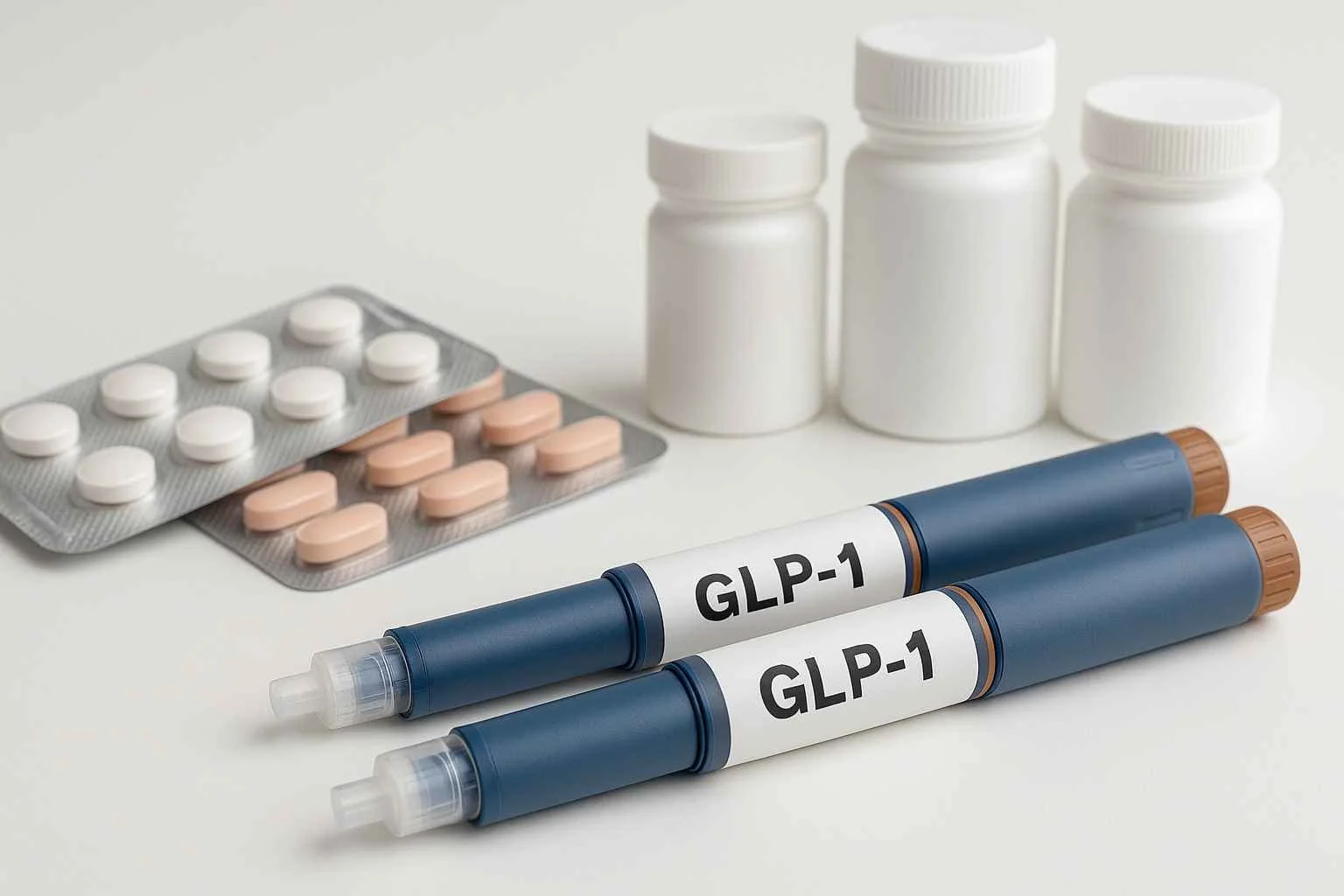
Over the last few years, GLP-1 medications and other incretin-based therapies have become well known for weight loss and metabolic improvement. But this was not their original intention or design. As we have seen in the last few weeks, the data scope and analysis are continuing to evolve. What does this mean? New benefits are found with more data points, essentially more time.
Recently research is pointing to another potential benefit:
GLP-1 medications may help reduce the risk of several obesity-related cancers.
This doesn’t mean these medications “treat cancer,” but growing evidence suggests they may lower risk or slow mechanisms that contribute to cancer development. Here’s what we know so far; based on human data.
What the Latest Research Shows:
1. GLP-1 medications appear to reduce overall cancer risk
Recent large pooled analyses found no increased cancer risk and in some cases a modest reduction across certain cancer types.
2. Strongest evidence: Reduced risk of liver cancer (HCC)
One 2024 pooled analysis showed that people using GLP-1 medications had up to a: 58% lower risk of hepatocellular carcinoma (liver cancer)
This makes sense because GLP-1 drugs:
Reduce liver fat
Improve insulin sensitivity
Lower liver inflammation (a major driver of liver cancer)
3. Signals of protection for other cancers
Observational studies suggest lower risk for:
Endometrial cancer
Ovarian cancer
Colorectal cancer
Meningioma
These are cancers known to be influenced by obesity, insulin resistance, and chronic inflammation.
4. A few studies noted a possible link to kidney cancer
This does NOT prove causation, but because the signal appeared in some retrospective data, researchers are watching closely.
More long-term data is needed.
How Could GLP-1 Medications Lower Cancer Risk?
Scientists propose four main mechanisms:
1. Reduced insulin (huge factor)
Insulin is not just a hormone; it can act as a growth signal for cancer cells.
GLP-1 drugs lower insulin levels dramatically.
2. Weight loss & lower inflammation
Obesity contributes to at least 13 types of cancer.
By reducing fat mass and inflammation, GLP-1 medications help reduce cancer-promoting pathways.
3. Better liver health
Liver fat and chronic liver inflammation (NASH) drive the development of liver cancer.
GLP-1 drugs meaningfully improve both.
4. Possible immune-modulation
Early human and animal data suggest GLP-1 signaling may improve:
Immune surveillance
Tissue inflammation
Mitochondrial energy signaling
This could make tissues less vulnerable to cancerous change.
Important Notes
GLP-1 medications do NOT replace cancer screening
They do not treat cancer
More long-term research is needed
The kidney cancer signal remains inconclusive
Key Takeaways
GLP-1 medications do not increase overall cancer risk in current evidence.
They may provide protective benefits, especially against liver, endometrial, ovarian, and colorectal cancers.
Improvements in insulin resistance, weight, inflammation, and liver health may drive this effect.
A potential association with kidney cancer requires more research.
These medications should be part of a comprehensive metabolic and preventive care plan, not a standalone strategy.
-Dr. Lauren Hutson, Austin Medicine

Meet the Author
Dr. Lauren Hutson is an experienced Primary Care Provider with degrees in Neuroscience and Biology from the University of Texas at Austin. She completed her residency at Baylor Scott & White, Texas A&M, with ABIM certification in Internal Medicine and has developed a strong focus on preventive care and chronic illness management. During the COVID-19 pandemic, she provided critical care as a Hospitalist in New Mexico, exemplifying her commitment to saving lives.
Dr. Hutson is also trained in Functional Medicine, is ABHRT and SSRP certified, and holds ABCN certification pending- these tools help exemplify her passion for root cause approach and healing the body as a whole. She practices medicine at the cellular level, focusing on enhancing longevity and optimizing long-term health by addressing root causes. She believes that all disease can start in the gut, and has authored a book on gut health to share her insights on the microbiome’s role in overall wellness.
Her front-line experiences during the pandemic inspired her to emphasize preventive health and health span over lifespan, investing in personalized strategies that empower patients to live healthier, longer, and more vibrant lives.