
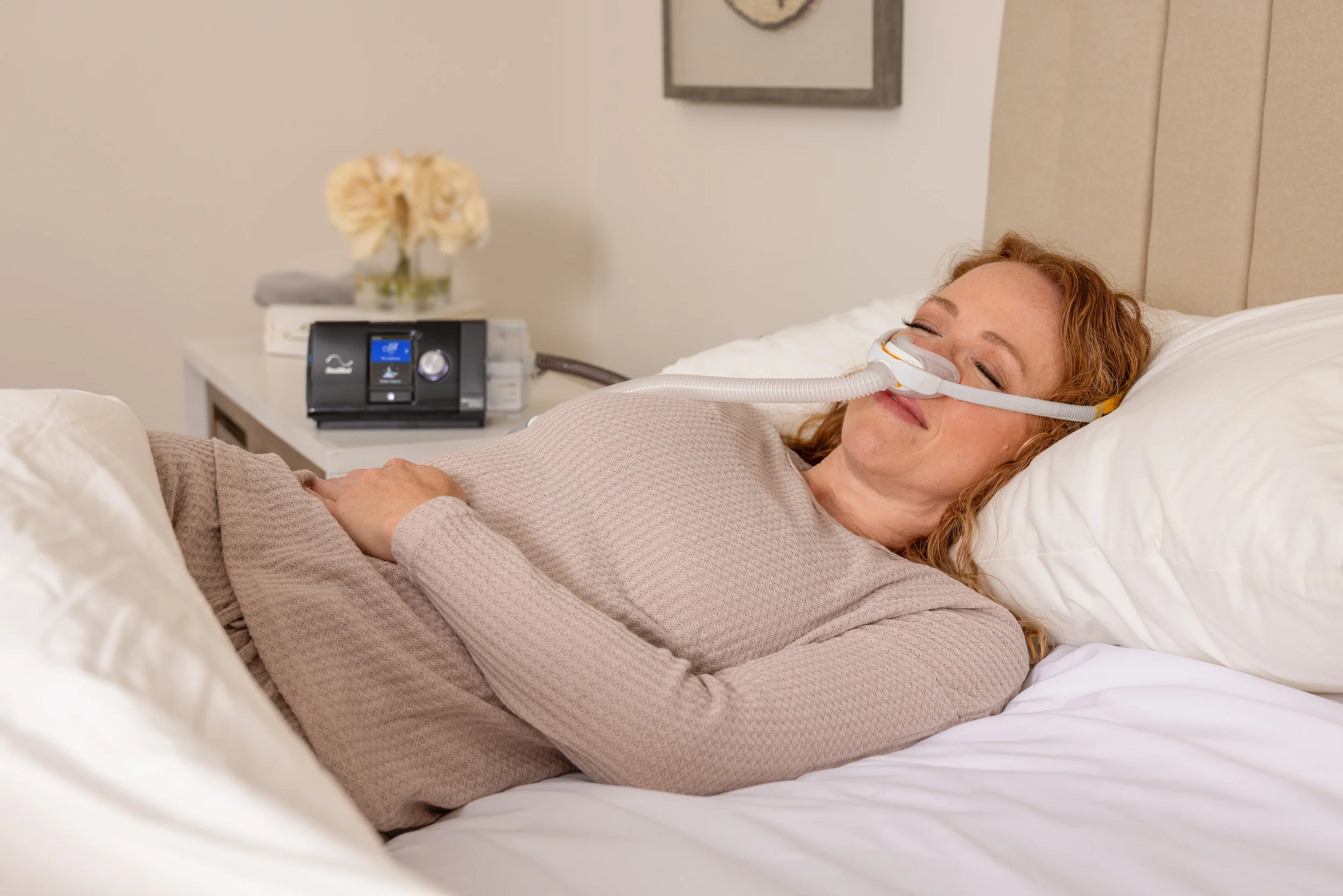
The image most people have of sleep apnea is a heavy-set middle-aged man who snores loudly and falls asleep watching television. That image has done enormous damage.
Sleep apnea is a serious condition that can affect anyone regardless of sex or gender, yet it is often misdiagnosed in women as menopause, depression, or high blood pressure.
Think about how significant that is. Women are showing up with a serious sleep disorder and being sent home with an antidepressant or a hormone patch. Not because their doctors are careless, but because the presentation looks different and the screening tools were largely built around male physiology.
Up to 75 percent of women with obstructive sleep apnea remain undiagnosed, with relevant clinical and socioeconomic consequences. That is not a small oversight.
The reason the diagnosis gets missed is that women's symptoms are genuinely different. Women often report daytime fatigue, insomnia, depression, anxiety, and poor sleep quality rather than excessive daytime sleepiness or snoring, which may lead to fewer sleep clinic referrals.
Less dramatic on the monitor. Equally dangerous in the body. That distinction matters enormously.
What Sleep Apnea Actually Looks Like in Women
This is what I am looking for when I talk to my patients. These are the symptoms that should put sleep apnea on your radar even if you do not snore, even if you are not overweight, and even if no one has ever mentioned it to you before.
Fatigue that sleep does not fix. You went to bed at a reasonable hour. You slept eight hours. You woke up exhausted. This is not just being tired. This is a specific pattern of unrefreshing sleep that points directly to a condition interrupting your sleep architecture all night long.
Waking up with headaches. Morning headaches are a classic and underrecognized sign of nighttime oxygen drops and elevated carbon dioxide that builds up when breathing is repeatedly disrupted.
Anxiety, depression, or mood instability that does not fully respond to treatment. A significant number of women I see who have been treated for anxiety or depression for years without meaningful improvement turn out to have untreated sleep apnea. The neurochemical disruption from chronic sleep fragmentation and hypoxia mimics and worsens mood disorders in ways that antidepressants alone cannot address.
Brain fog, memory problems, and difficulty concentrating. Your brain consolidates memory and clears metabolic waste during deep sleep. When sleep apnea prevents you from reaching deep sleep consistently, cognitive function degrades in measurable ways.
Frequent nighttime urination. This one surprises people. Repeated arousals during sleep trigger hormonal changes that increase urinary output. Many patients have been told this is a bladder problem. Sometimes it is a breathing problem.
Insomnia. Not all sleep apnea looks like excessive sleepiness. Some people cannot fall or stay asleep because the arousals from breathing disruption train the brain into a hypervigilant state.
High blood pressure that is hard to control. If your blood pressure is resistant to medication, sleep apnea should be on the differential list. The overnight sympathetic activation from apneic episodes is one of the most direct drivers of treatment-resistant hypertension we know of.
Weight gain, especially around the midsection, despite doing things right. Chronic sleep disruption elevates cortisol, suppresses leptin, raises ghrelin, and creates a metabolic environment that promotes fat storage and resists weight loss regardless of diet and exercise, a pattern that often overlaps with stalled weight loss after menopause.
The Health Risks of Leaving It Untreated
This is where I want to be very direct, because the consequences of untreated sleep apnea are not minor inconveniences. They are serious, cumulative, and in some cases life-threatening.
Cardiovascular disease. In a study of more than 5,000 participants followed over 7.5 years without prevalent cardiovascular disease, a diagnosis of obstructive sleep apnea was associated with an adjusted hazard ratio of 2.6 for all-cause mortality.
OSA's prevalence is recorded as high as 40 to 80 percent among patients with hypertension, heart failure, coronary artery disease, pulmonary hypertension, atrial fibrillation, and stroke; yet it remains under-recognized and undertreated within routine cardiology care.
Dementia and cognitive decline. Sleep apnea contributes to the development of dementia among adults, particularly women. At every age level, women with known or suspected sleep apnea are more likely than men to show signs of dementia. Sleep apnea increases significantly post-menopause yet remains underdiagnosed.
Hormonal disruption. The relationship between sleep apnea and hormonal imbalance in women is one of the most underappreciated connections in medicine. OSA in premenopausal women is strongly linked to depression, metabolic syndrome, and polycystic ovary syndrome, while postmenopausal women with OSA reported hypertension and diabetes.
Rising mortality. From 2000 to 2023, age-adjusted mortality rates attributed to obstructive sleep apnea and hypertension rose from 0.44 per 100,000 in 2000 to 4.87 per 100,000 in 2023, with an average annual percent change of 11.55 percent. We are not getting better at preventing these deaths.
Why I Bring This Up With So Many of My Patients- I know it's annoying, buts it's because I care.
In functional and integrative medicine, we are trained to look for the upstream drivers of downstream symptoms. Sleep apnea is one of the most powerful upstream drivers I know of.
When someone comes in with fatigue, treatment-resistant hypertension, weight loss resistance, anxiety, brain fog, or hormonal chaos, sleep apnea is on my list. Not because it is always the answer, but because it is frequently part of the picture and almost never the first thing anyone else has thought to check.
The standard screening tools were built around men. Traditional tools such as STOP-BANG and apnea-hypopnea index thresholds were validated in male cohorts, failing to account for hormonal decline, altered sleep architecture, and sex-specific neuroinflammation post-menopause. That means a woman can screen negative on a standard questionnaire and still have clinically significant sleep apnea.
Getting tested is straightforward. Home sleep studies have made it easier than ever to get objective data without spending a night in a lab. If you have been struggling with any of the symptoms above and no one has asked you about your sleep, that conversation is overdue. And CPAP is not the ONLY treatment these days!
The Bottom Line
Sleep apnea is not a man's disease. It is not just a snoring problem.
It is a condition that quietly raises your cardiovascular risk, accelerates cognitive decline, disrupts your hormones, makes weight management harder, and chips away at your quality of life in ways that get blamed on everything else. And in women, it looks different enough from the textbook presentation that it gets missed for years.
If you are in Austin and want to dig into what is driving your symptoms, we are here.
-Dr. Lauren Hutson

Meet the Author
Dr. Lauren Hutson is an experienced Primary Care Provider with degrees in Neuroscience and Biology from the University of Texas at Austin. She completed her residency at Baylor Scott & White, Texas A&M, with ABIM certification in Internal Medicine and has developed a strong focus on preventive care and chronic illness management. During the COVID-19 pandemic, she provided critical care as a Hospitalist in New Mexico, exemplifying her commitment to saving lives.
Dr. Hutson is also trained in Functional Medicine, is ABHRT and SSRP certified, and holds ABCN certification pending- these tools help exemplify her passion for root cause approach and healing the body as a whole. She practices medicine at the cellular level, focusing on enhancing longevity and optimizing long-term health by addressing root causes. She believes that all disease can start in the gut, and has authored a book on gut health to share her insights on the microbiome’s role in overall wellness.
Her front-line experiences during the pandemic inspired her to emphasize preventive health and health span over lifespan, investing in personalized strategies that empower patients to live healthier, longer, and more vibrant lives.